Referral programme →

Home  /  Courses  /  For Doctors

Admissions openFor registered medical practitioners · PGDAM, Botox & Fillers, CAG, CMM, CBGF

Aesthetic medicine does not replace your practice. It sits alongside it.

Most doctors who come to us are not leaving medicine. They are adding something to it: a different kind of day, a different kind of patient, and a practice that grows on referral rather than on volume.

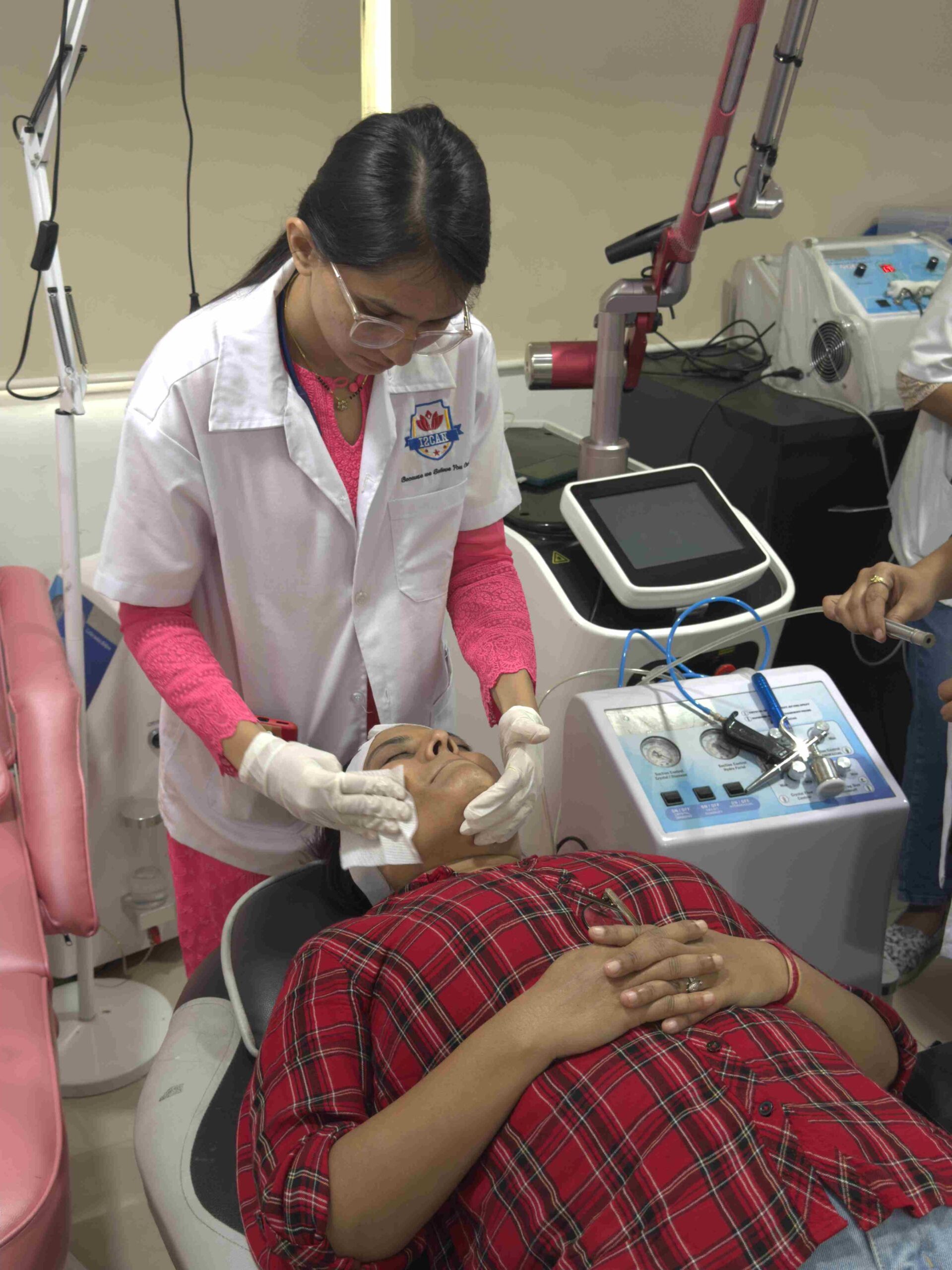
I2CAN’s aesthetic medicine courses are open to registered medical practitioners. They cover injectables, machine-based treatments, aesthetic gynaecology and clinical protocol, taught through supervised hands-on practice on real patients. The flagship programme is PGDAM, the Post Graduate Diploma in Aesthetic Medicine, formerly written PGDCC.

3
Weeks, classroom or online
4
Centres, plus online
30
Batch size, capped
Free
Diploma re-attendance for life

Talk to a counsellor

No pressure, no spam. We will tell you if a programme is not right for you.

We respect your privacy. Your details are never shared.

01 / What you can enrol in

Five programmes
for doctors.

One diploma that takes you from no aesthetic background to practice-ready, and four certificates that add a single capability to a practice you already run. No fees are published here; a counsellor will talk you through what applies to you.

The flagship diploma

Post Graduate Diploma in Aesthetic Medicine

PGDAM (formerly PGDCC)

  • Classroom: 3 weeks
  • Online: 3 weeks + 1 week hands-on
  • Pune · Navi Mumbai · Mathura · Hyderabad

Takes a doctor with no aesthetic background to practice-ready across skin, hair and the full non-surgical range.

Indicative modulesSkin and hair anatomy · skin analysis and consultation · acne and acne scarring · chemical peels · pigmentation · anti-ageing and rejuvenation · energy-based devices · lasers · trichology · injectables · tattoo removal · medicated facials

Free re-attendance in any future batch, for life.
Certificate

Certificate in Botox & Fillers

  • Classroom: 3 days, 9 AM to 4 PM
  • Online: not available
  • Pune

Botulinum toxin and dermal fillers for the face, from anatomy and assessment to product choice and procedure protocol.

Indicative modulesFacial anatomy and markings · the facial ageing process · facial assessment for Botox and fillers · product knowledge · procedure protocol · mid-face: cheeks, under-eye, nasolabial folds · crow’s feet · forehead

Certificate

Certificate in Aesthetic Gynaecology

  • Classroom: 4 days, 9 AM to 4 PM
  • Online: not available
  • Pune

Non-surgical intimate aesthetics, a distinct practice area with very little trained supply in India.

Indicative modulesAnatomy · post-pregnancy presentations · incontinence · dryness · rejuvenation approaches

Certificate

Certificate in BB Glow Facial

  • Classroom: 1 Day
  • Online: not available

The BB Glow semi-permanent treatment end to end, as a single-day addition to an existing practice.

Indicative modulesSkin preparation · serum selection · application technique · client aftercare

What any individual doctor may perform depends on their own qualification. Injectable work in particular is not open to every medical qualification. The eligibility guide sets out exactly which qualification permits which procedure, and why.

The part that lasts longest

When a difficult patient walks in three years from now, you will want somewhere to put the question. Our alumni have that: a group where the faculty and the doctors who trained before them answer, usually the same day. It costs nothing and it does not expire.

Come back any time

Re-attend the diploma you paid for in any future batch, without limit and without further fee.

Free online sessions

Regular sessions on what is happening in the field, open to every alumnus whether or not you take membership.

The support group

Post a case, get answers from faculty and from doctors who have already seen it.

Annual membership

Six hands-on masterclasses a year on procedures and technologies that entered practice after you trained, plus priority access to super-specialty masterclasses.

Once a year the community meets in person at Aesthetix, our aesthetic medicine congress: twenty-plus sessions, live demonstrations and faculty from several countries. See the congress ↗ · Upcoming conferences

02 / Why this field

Ask yourself
five questions.

Not about medicine in the abstract. About the shape of your working week.

  1. Do you want to finish your day at a predictable hour, most days?
  2. Do you want a practice with no emergencies and no night calls?
  3. Do you want successful, affluent and healthy people as your clients?
  4. Do you want appointments that begin and end when they are supposed to?
  5. And alongside all of that, do you want to grow your practice?

If those five are true, this is the field.

Aesthetic medicine is one of very few areas of clinical practice where all five can be true at the same time. The work is consultation-led, planned in advance, and delivered as courses of treatment rather than one-off visits, so a practice built carefully keeps compounding instead of starting again each morning.

Knowledge for Chemical PeelFaculty lecture · 1 hr 2 min

Sit in on a real PGDAM faculty lecture before you speak to anyone. More free course videos.

03 / The work itself

What you will
actually be doing.

Procedures on skin and hair that leave a person looking better than they did when they walked in. Not strictly clinical, not merely cosmetic: a combination of the two, which is what makes the judgement as important as the technique.

Skin

  • Acne
  • Acne scarring
  • Pigmentation
  • Anti-ageing and rejuvenation

Facial contouring

  • Shaping and definition
  • Volume and balance
  • Non-surgical approaches

Hair

  • Hair fall and thinning
  • Scalp conditions
  • Restoration approaches

Cosmetic procedures

  • Hair removal
  • Tattoo removal
  • Skin resurfacing
04 / How it is taught

Two things to learn,
learned differently.

Performing a procedure well is one skill. Deciding which procedure a particular patient should have is another, and it is the one that separates a competent practitioner from a busy one. We give both equal weight.

The judgement

Deciding the line of treatment

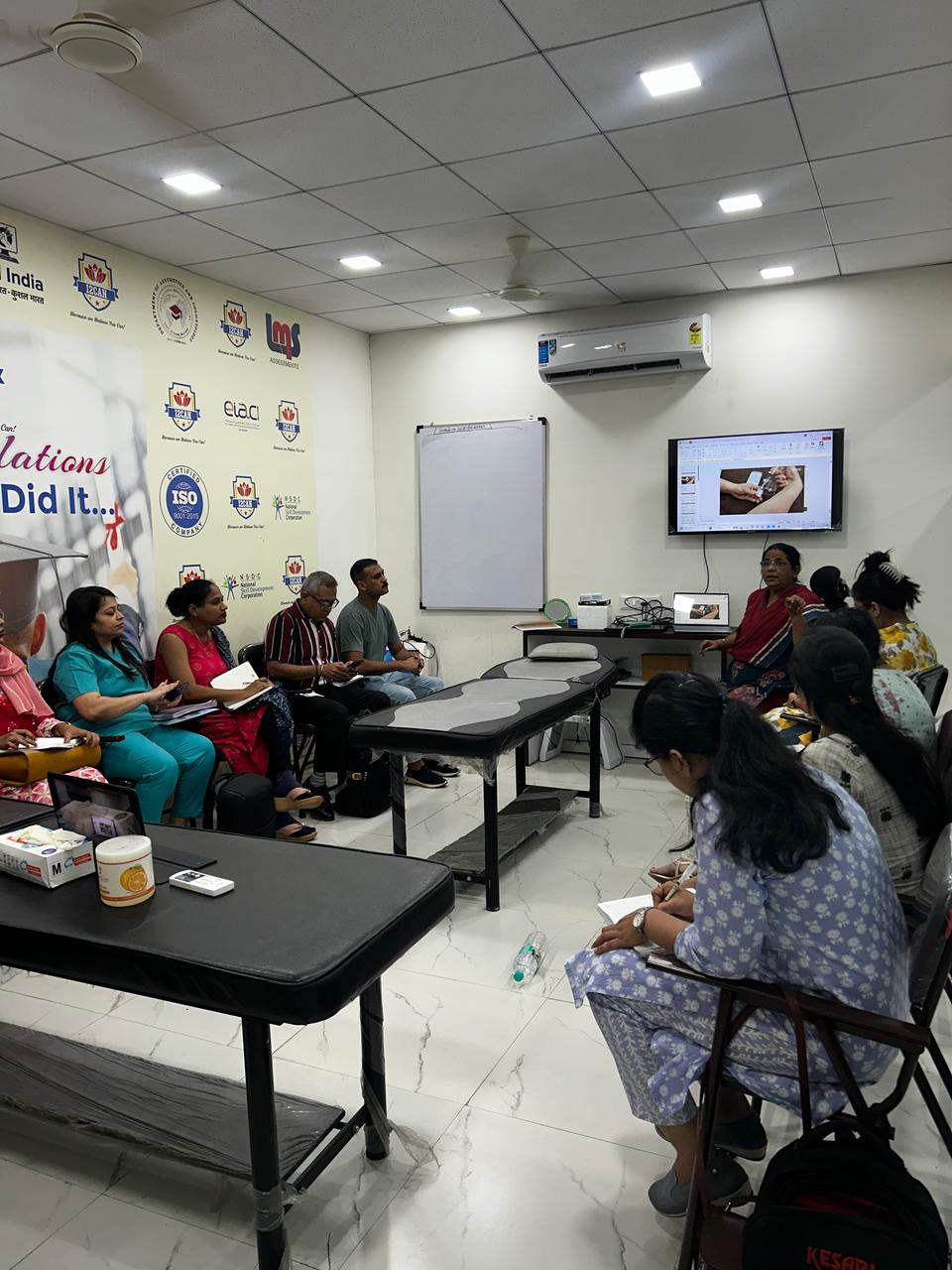
How to consult. How to assess a face, a scalp, a skin type. How to choose between approaches, sequence them, and set expectations a patient will actually be satisfied with. Taught through cases rather than lists, because judgement does not transfer from a slide.

The technique

Performing it well, and efficiently

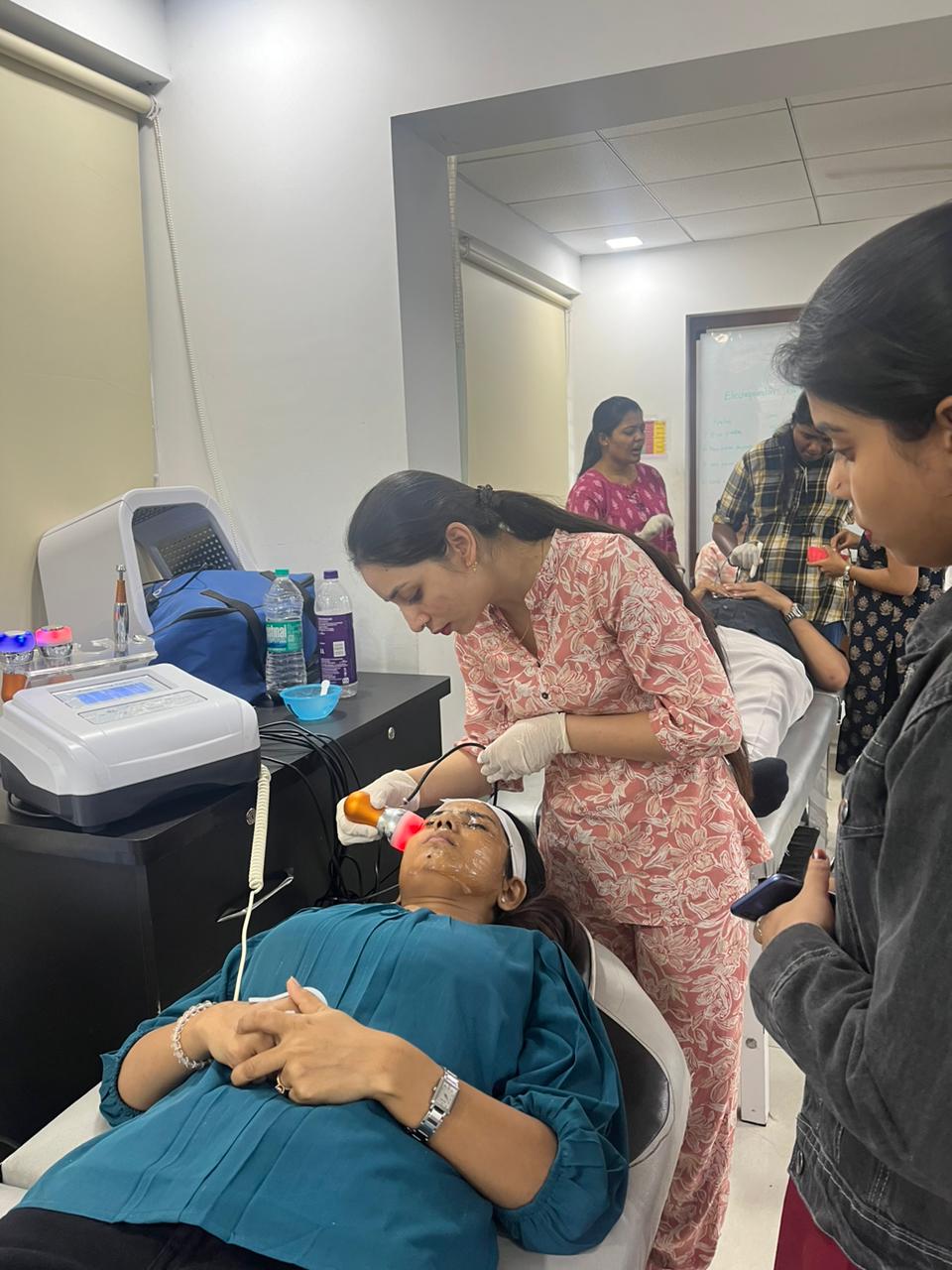
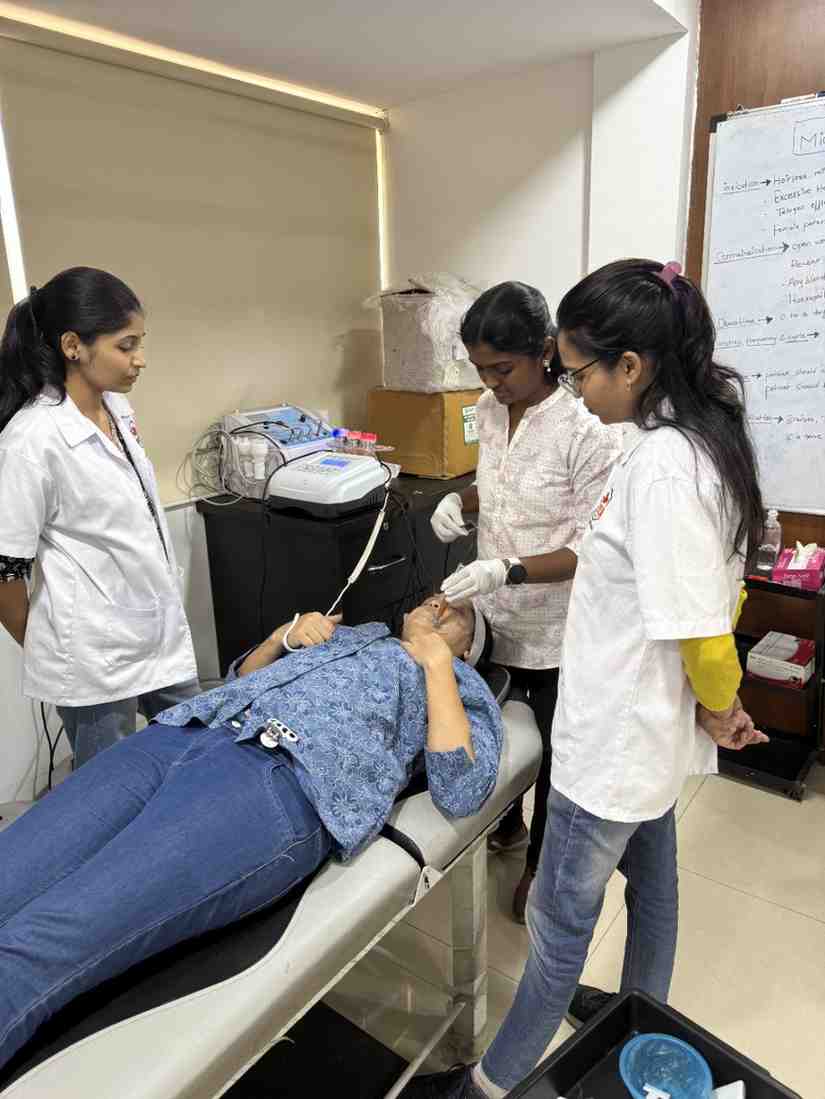
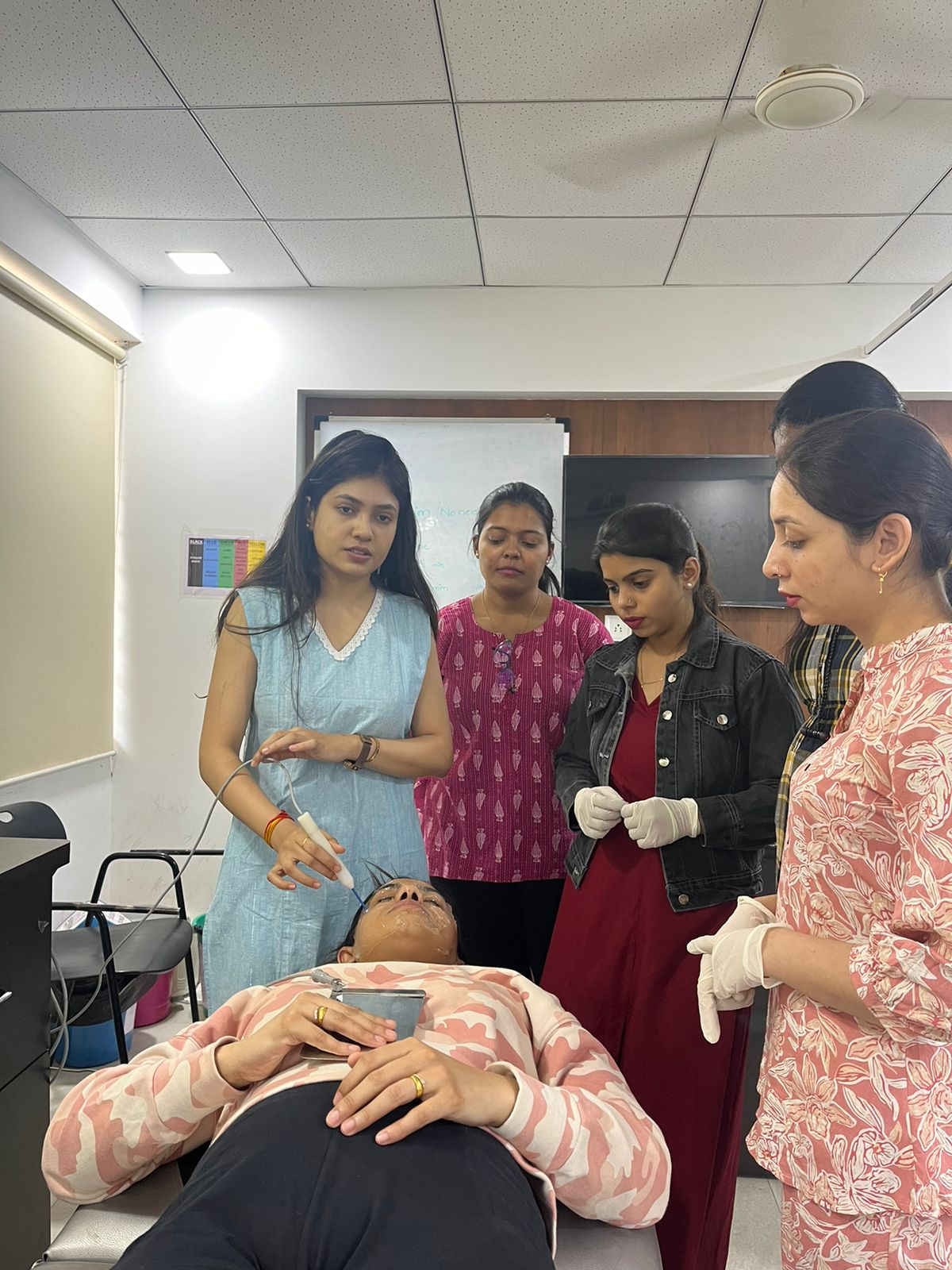
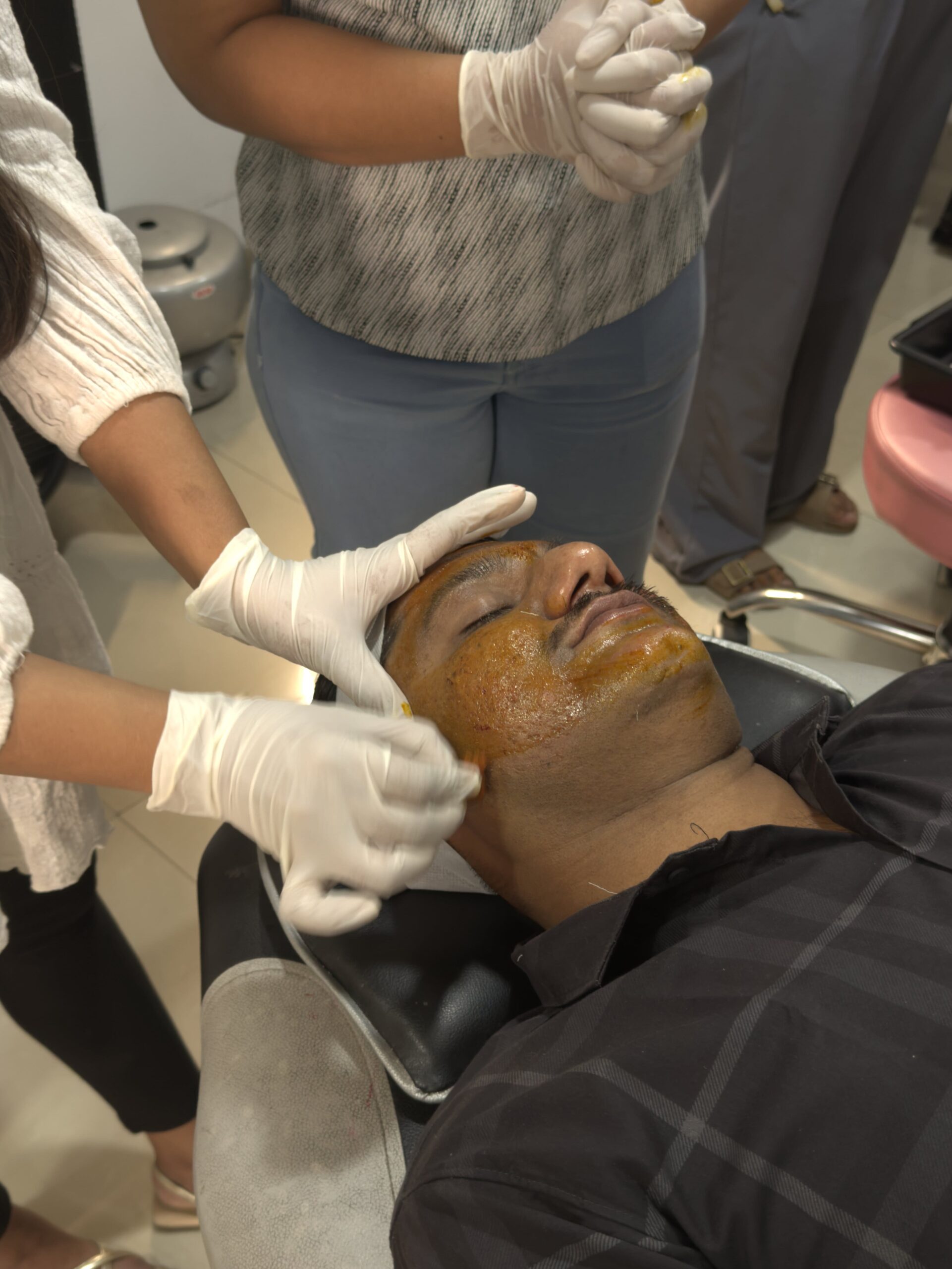
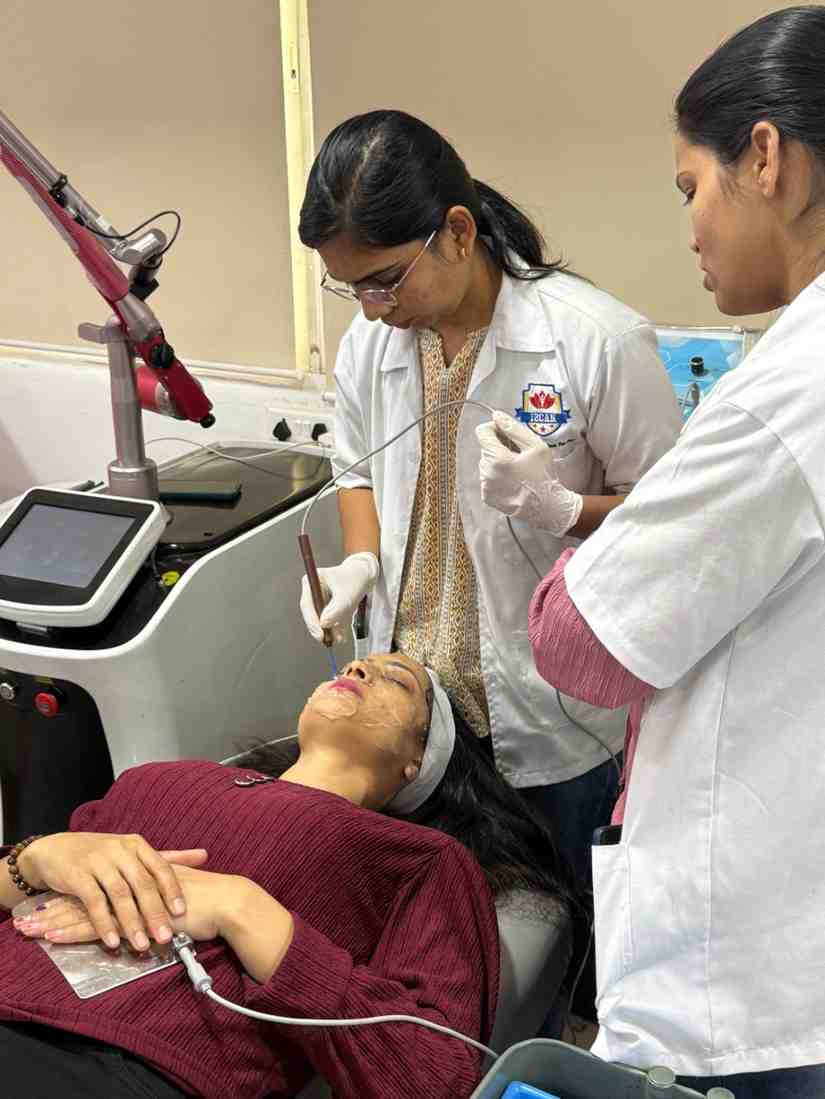
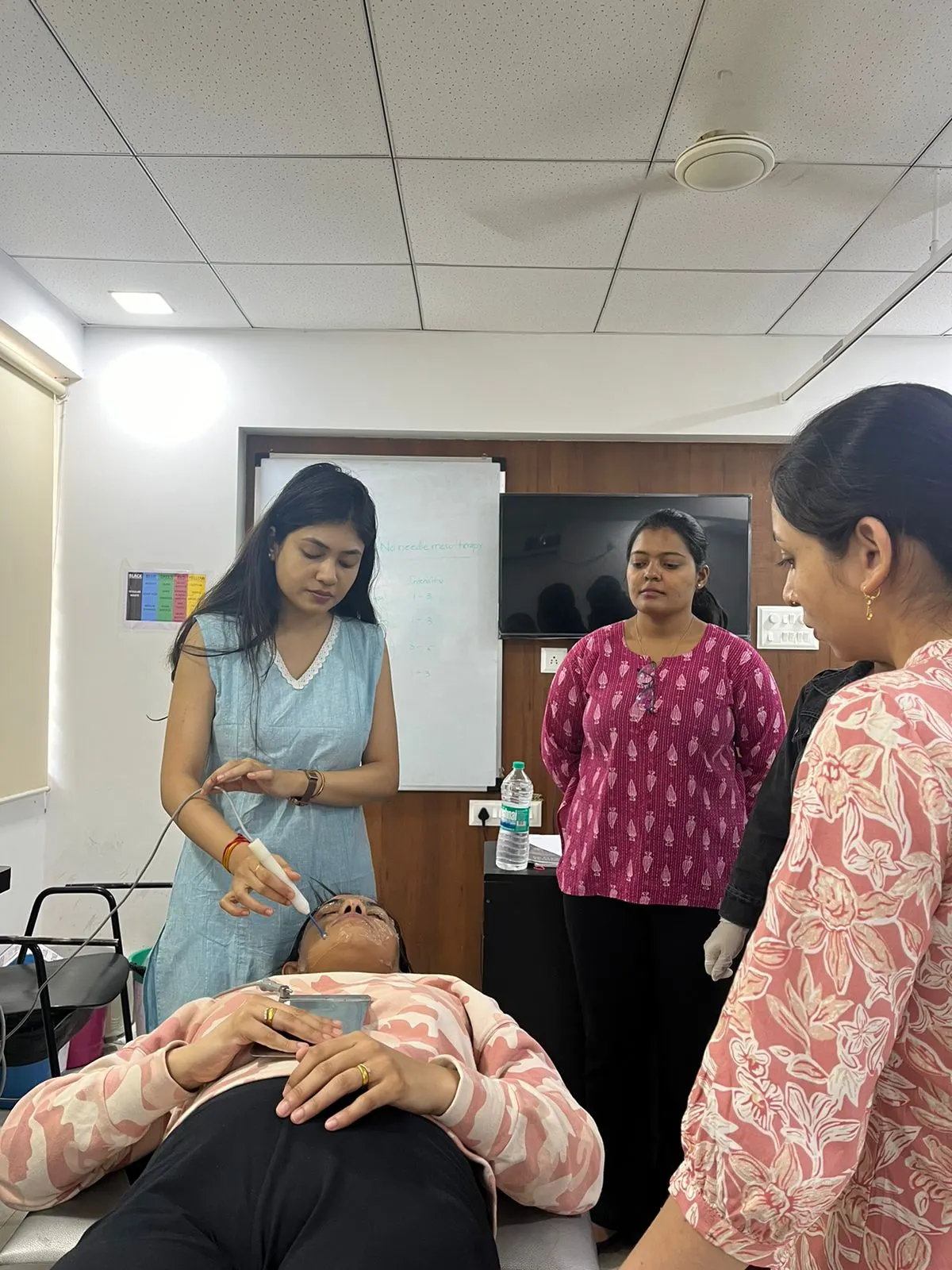
The theory behind each procedure, then the procedure itself, on real patients, under supervision, until it is comfortable. Written protocols for every technique, so nothing rests on how good your notes were on the day.

The method follows what is known about how adults actually learn: understand the concept, see it applied to a real person, then do it yourself. Case studies run throughout rather than appearing at the end, so students are continually applying what they have just learned instead of accumulating it.

Nothing about that is improvised. The sequence, the case load, the ratio of theory to practice and the point at which a student first touches a patient are all deliberate, and they are the same in every batch at every centre.

“The best hands-on I have seen anywhere.”

Our students say it more often than they say anything else, across 1,000+ Google reviews averaging 4.9. Read them by centre.
Detailed Use of Exosomes for Hair RestorationFaculty lecture · 1 hr 40 min

What a batch actually looks like

See the full gallery
Classroom at I2CAN
Classroom
Case discussion at I2CAN
Case discussion
Supervised hands-on at I2CAN
Supervised hands-on
Device training at I2CAN
Device training
05 / The long view

You are not enrolling in a course.
You are joining a community.

The course is the entry point. What decides whether a practice works is everything that happens afterwards, and that is the part most institutes leave you to manage alone.

  1. Enter

    Learn it properly

    Theory and hands-on in equal measure, on real patients, with written protocols you take away.

  2. Launch

    Set up without guessing

    The right machines and products, help getting online, and a group to ask the early questions in.

  3. Grow

    Stay current

    Annual membership for what is new, legal and compliance support, advanced masterclasses, the congress.

  4. Lead

    Become the reference

    Alumni return to teach, to present cases, and to speak at the congress they once attended to learn from.

06 / What you are certified by

Every programme carries an I2CAN qualification.

The aesthetic medicine diploma at Pune and Navi Mumbai additionally leads to a Beauty & Wellness Sector Skill Council examination and the Aesthetic Skin Technician certificate.

No accreditation I2CAN holds confers any right to practise. What you may perform is set by your own medical registration.

  • Beauty & Wellness Sector Skill Council
  • ISO 9001:2015
  • International Accreditation Organization
  • International Accreditation Forum
07 / From people who trained here

In their
own words.

Recorded by I2CAN students across our centres. Written reviews, unedited, are on our Google listings.

Journey to ExcellenceStudent stories
Empowering MindsStudent testimonials
Mechanism of Action of Glutathione for SkinFaculty lecture · 1 hr 39 min
08 / Common questions

Questions doctors
ask us.

Answered fully here rather than behind an enquiry form.

Eligibility and scope

Who can enrol in the aesthetic medicine programmes?

Registered medical practitioners. Some individual programmes are further restricted, and injectable training in particular is not open to every medical qualification. The eligibility guide sets out exactly which qualification permits which programme, and the reasoning behind each restriction. Check your eligibility.

I am still an intern, or in my final year. Can I attend?

Yes. You may attend and be certified. You must be registered with your medical council before you begin practising, which is a regulatory requirement rather than one of ours.

Why do some doctors end up in trouble for performing these procedures?

Almost always because they performed something outside what their own qualification permits. We teach each doctor only the procedures they are legally allowed to perform, and we state the boundary plainly rather than leaving it for you to discover afterwards.

The qualification itself

Is this a university degree?

No. Our programmes are vocational qualifications, not university degrees, and we do not claim otherwise. The two sit under different regulatory tracks in India. It is worth understanding the distinction before comparing any institutes.

Will this let me practise abroad?

No training certificate from any institute exempts you from a country’s own licensing requirements. Every country sets its own examinations and registration rules. If practising overseas is your intention, verify that country’s requirements directly before you enrol anywhere.

I completed my MBBS outside India. Can I practise here after this?

That depends on where you qualified, not on this programme. Graduates of some countries may register directly; graduates of others must first clear the screening examination; and graduates of countries on neither list cannot practise in India at all. Confirm your own position with the National Medical Commission before enrolling.

Is the institute accredited?

I2CAN is certified under ISO 9001:2015 and accredited by the International Accreditation Organization and the International Accreditation Forum. Our aesthetic medicine and cosmetology diplomas at Pune and Navi Mumbai additionally lead to a Beauty & Wellness Sector Skill Council examination and the Aesthetic Skin Technician certificate. No accreditation I2CAN holds confers any right to practise.

Format and training

How long is it, and what are the formats?

PGDAM runs three weeks in the classroom, Monday to Saturday, or three weeks online followed by one mandatory week of hands-on practice in person. The certificates are classroom only: Botox and Fillers runs three days, CAG and CMM four days, and CBGF 1 Day.

Is three weeks really enough?

It has been enough for ten years of batches, including the hands-on. But the honest answer is that it depends on you, which is exactly why you may re-attend the whole diploma in any future batch, free, for as long as you practise. Some doctors come back once. A few come back three times.

Will I work on real patients?

Yes, across every procedure taught. Not models, not mannequins, not observation. If you want more repetitions than the batch allows, you may re-attend the hands-on sessions at no cost.

How large are the batches?

Rarely more than thirty. Hands-on time per student is the constraint, so batch size is capped rather than filled.

Is the programme the same at every centre?

Yes. The same syllabus, the same protocols and the same case material at all four centres. Where you train does not change what you learn.

What material do I take away?

A theory book, and, for the diploma, a protocol book setting out each procedure step by step, together with guidance on combination therapy. Classroom students receive hard copies; online students receive soft copies.

Can I do this without leaving my current work?

Yes. The online format with a separate hands-on week exists precisely so that practising doctors can fit it around existing commitments. You may also defer your admission by up to six months after booking, or move between batches, by telling your counsellor in advance.

After the programme

Do I need my own clinic before I start?

No. Many doctors begin by adding a treatment day to an existing practice, or by working in an established aesthetic clinic while they build toward their own. The final stage of the programme is shaped around whichever route you intend to take.

What does setting up actually require?

There is no single figure, and anyone who gives you one without asking questions is guessing. It depends on the city, the size of the setup, which treatments you intend to offer and the standard of machine you choose. Clinic setup is covered during the programme, and afterwards we help with choosing and sourcing machines and products.

Do you help with jobs?

I2CAN is not a placement agency and does not promise placement. What we do have is tie-ups with more than thirty clinic chains for interview introductions, along with interview guidance and feedback if an interview does not go your way.

Can I really re-attend without paying again?

Yes, for the aesthetic medicine diploma, with no time limit and subject only to seat availability in the batch you want. Free re-attendance applies to the diploma; the short certificates in aesthetic gynaecology, microblading and BB Glow are not included.

The first conversation

Costs nothing, and commits you to nothing.

Tell us where you are in your career and what you are picturing. If a programme fits, we will say which one and why. If nothing fits yet, we will say that too. It is better said now than after you have paid.

Request a call back

No pressure, no spam.

We respect your privacy. Your details are never shared.

Get course details - talk to an expert Start